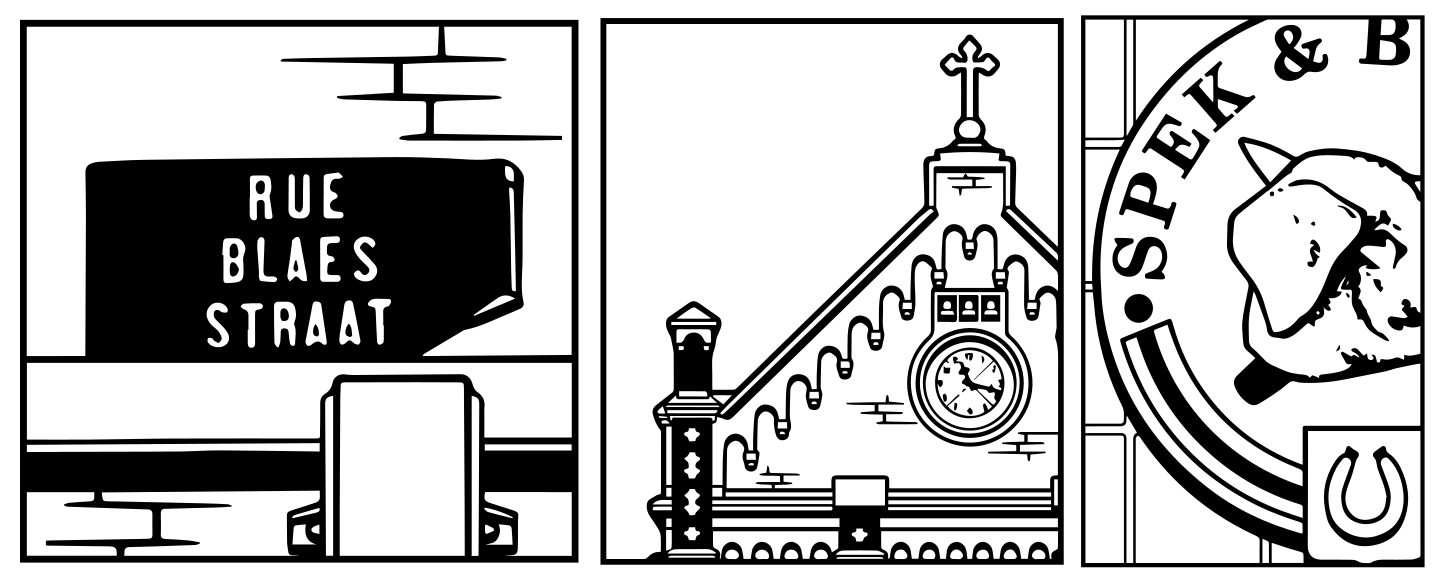
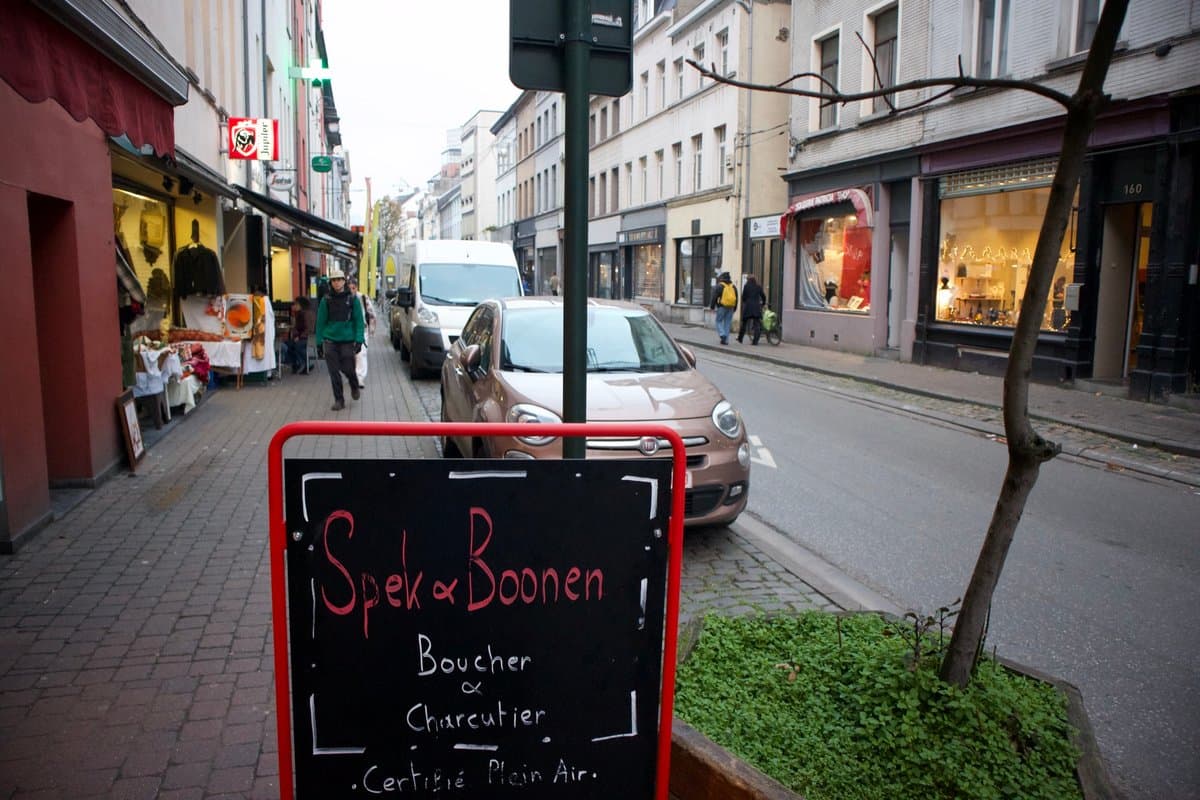
A butcher's shop in the Marolles, Brussels. We buy whole carcasses and work them ourselves. What we sell comes from people and places we can name.
We work with whole carcasses. They hang properly and we cut them to order. Free-range animals from family farms and nature reserves, prepared on site in small batches. Charcuterie ripens three to four weeks before it leaves the counter. None of that is fashionable. It's slower, and the cuts you can't sell that day still need a use found for them. We do it because it's the work.
Charcuterie, sausages, meat salads, mayonnaise, sauerkraut: made with ingredients we'd cook with at home. Meat doesn't have to come pre-packed and tasteless. Ours is free-range and marbled, and it has some character to it.
Bjorn Boonen, born 1977, grew up in the Limburg countryside. As a child he went along when his parents drove to Ciney for beef: a love for good meat came with the territory. He came to Brussels to study and stayed. Meat-product technology at KU Leuven Ghent, plus a technician's qualification in fermentation techniques: two diplomas that later proved exactly the right hands for what an artisanal butcher's shop demands. Alongside that he cooked, first as a student, then teaching at Ceria. There was a radio show that ran for years. He toured with his own sound system at festivals, mostly in Belgium and Italy, and did an apprenticeship in Dominica for rum distilling. But the kitchen kept pulling. There, dissatisfied with the omnipresent Belgian Blue and equally bland industrial pork, he started experimenting with rarer breeds and traditional charcuterie. Spek & Boonen opened in 2018. Alongside the shop he still brews at home, though there's less time for it now.
The Galloway grazes a nature reserve into better shape. The beef is what that work leaves behind. That's the order that matters to us: the animal earns its place on the land first, and eats well as a consequence, not the other way round.
We buy the whole animal, so we sell the whole animal: the fillet and the shin, the loin and the cheek. We buy what's in season, so the list changes through the year and goes quiet when nothing's ready. We buy from people we can name, so we can tell you where a piece stood and what it ate.
None of this is a cause. It's how we'd want our own meat handled, so it's how we handle yours. If that's your kind of butcher, you've found one.