
How we choose
A whole carcass is a commitment. We have to find a use for every part, so we only buy animals we'd be glad to eat down to the last cut.
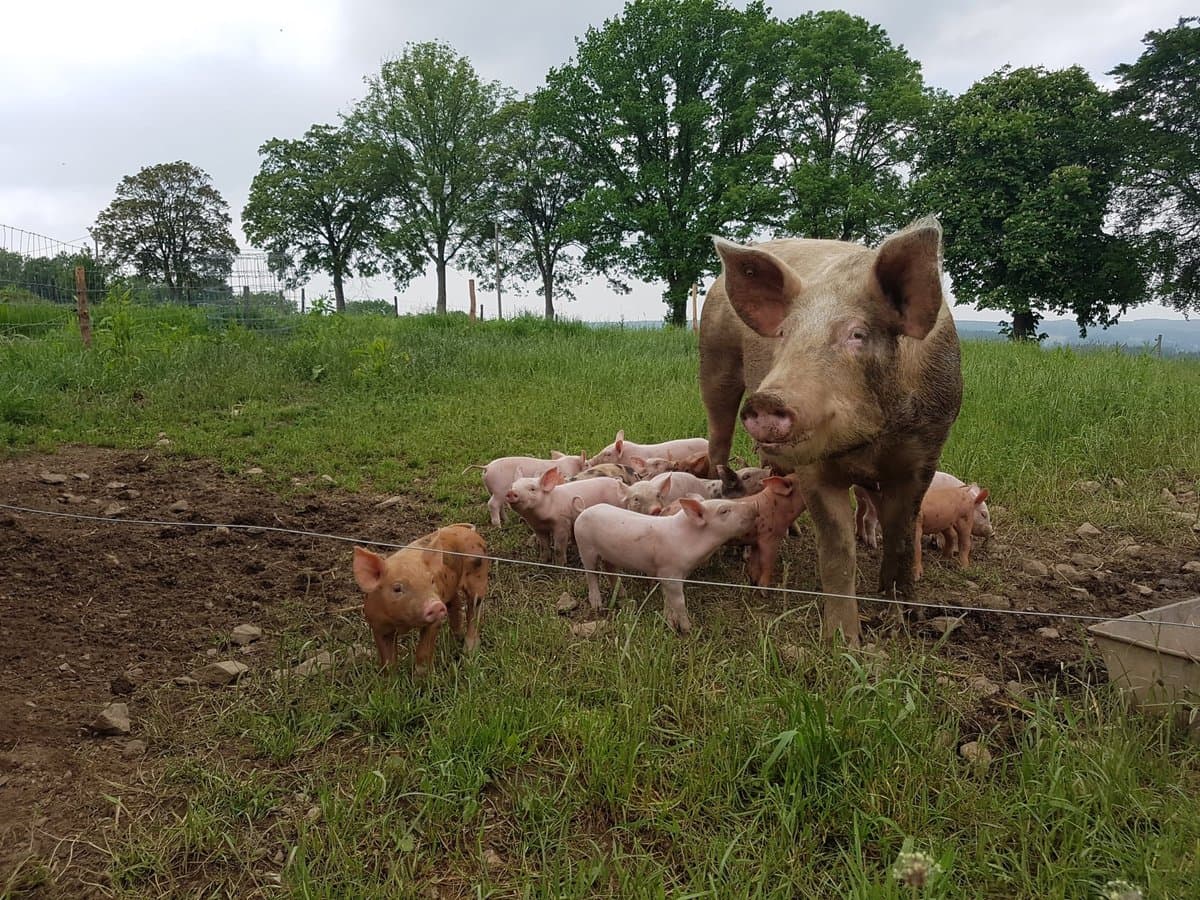
We don't buy from a market. We buy from people we can name and go back to: Dorien and Jan, who keep the Galloway in the Natuurpunt reserves, and Ben, who picks our pigs and our lambs. The lamb comes from a co-operative of farmers in the Ardennes. We say no more often than yes.
What makes an animal right is hard to put into words, and easy to see once you've handled enough of them. We look for a well-made, healthy animal that has finished slowly and evenly. Marbling, the fine fat inside the muscle, is the last fat an animal lays down, so only one that has had the time and the grass to get there carries it. We read it on the rump and in the line of the back, before we take the animal.
Buying is the easy part. We take the whole thing, hang it, age the beef on the bone for weeks, and work it down over the days that follow. It's slower than boxed cuts. It's the only way we know to stand behind what's on the counter.