
- Why is the meat more expensive than at the supermarket?
- For the kind of meat we sell, whole-carcass, certified, farm-direct, we're actually among the cheapest. We don't compete with the supermarket: that meat is industrial, ours isn't. The farmer raises around 200 pigs a year, not 20,000, and we pay him roughly double per kilo what an industrial buyer does. At our price, the farmer makes a living. The supermarket's price is lower because the farmer gets less. That's the whole difference.
- Where does the meat actually come from?
- Pork from the Porc Plein Air scheme in the Walloon Ardennes, with Porc Fermier topping up popular cuts. Beef from Galloway cattle grazing in Natuurpunt nature reserves in Flanders. Lamb, certified organic, from one co-operative of farmers around Virton, in the Gaume, where it is also slaughtered. Poultry from Label Rouge producers in the Landes forest, in the south-west of France. Each one has a cert page on this site that walks through the conditions and the auditor.
- Do you have a webshop?
- Not yet. You can order ahead for pickup: use the enquiry form, and we'll tell you when it's ready. A webshop is coming, but slower than we'd like, for an honest reason: we buy whole animals, so there are only so many entrecôtes on any given week's animal, and an online shop has to know that before you click order. We'd rather open it late than promise a cut we don't have.
- Am I paying for quality?
- No, you are paying for popularity. Everything in the counter comes from the same animals, with the same care. But we work with whole carcasses, so every cut has to sell at the same pace or the sums stop working. Our only lever is the price. A cut everyone asks for goes up a little, a forgotten cut comes down a little. The fillet is not better than the rest, it is just more famous.
- Can I order a specific cut, or something for an event?
- Yes. Most popular cuts are in the case but plenty are not, especially the spider steak, cheek, trotter, or larger pieces for parties. Use the enquiry form. We'll tell you when we can have it ready and what it costs.
- Why are you closed on Monday and Tuesday?
- We're a butcher's shop in the Marolles, on the Rue Blaes by the Place du Jeu de Balle. Sunday is flea-market day in the neighbourhood and one of our busiest, so we're open. Our week runs Wednesday to Sunday; Monday and Tuesday are our closing days. Wednesday morning we open again.
- Why don't you always have entrecôte?
- An animal has two of them, and we buy animals, not entrecôtes. When they're gone they're gone until the next animal; that's the arrangement. The same animal carries the onglet, the bavette, the spider steak: cheaper, and on a good day better. Ask, and we'll show you.
- Why does the butcher ask me so many questions?
- Because a kilo of stew meat can mean six different things, and the difference is your evening. How many people, how much time, which pan: with those three answers we can send you home with the right cut instead of the familiar one. Answer them and you'll eat better; that's the whole trick.
- Is your meat bio?
- Some of it. The lamb is certified organic. The pork is not: it carries Porc Plein Air instead, a scheme about how the pig lives, outdoors, naturally fed, without antibiotics, rather than about the bio label. Every chain has its certificate page on this site, with the conditions and the auditor, so you can judge the scheme instead of the sticker.
- Are you one of those woolly, save-the-world shops?
- If you mean incense and pan flutes: no, we're a butcher's shop. If you mean do we care how the animal lived: yes, more than we care how that sounds. We pay the farmer roughly double the industrial price for a pig, and we'd rather do that than print it on a tote bag. Small, local farms are simply where this kind of meat still comes from.
- What happens to the parts nobody asks for?
- They get worked. The cheeks braise, the bones become stock, the trim becomes sausage and américain, the livers go into the pâté. Buying whole animals only makes sense if the whole animal gets sold, so the counter is arranged to make the unfashionable cuts easy to say yes to.
- Do you make filet américain?
- Yes; this is Brussels, after all. Ours starts with the same Galloway beef as everything else in the case. Tell us when you're eating it and we'll portion accordingly; américain is a freshness question before it is a recipe.
- Is there alcohol in the pâté?
- Yes: genever. Not cognac, not rum, genever. If you need to avoid alcohol entirely, ask at the counter and we'll tell you exactly what goes into everything we make.
- Can I watch you work?
- Yes; the cutting happens where you can see it, on purpose. If you want to know what's happening to your roast, ask while it's happening. The only thing we ask is that you don't mind the sound of a saw.
- Do you give classes?
- Not yet, but they're in the pipeline: a knife, a carcass, and an apron for whoever dares. If you'd like to hear when the first one runs, leave your name through the form and we'll tell you before we tell anyone else.
- Why is my meat wrapped in a comic strip?
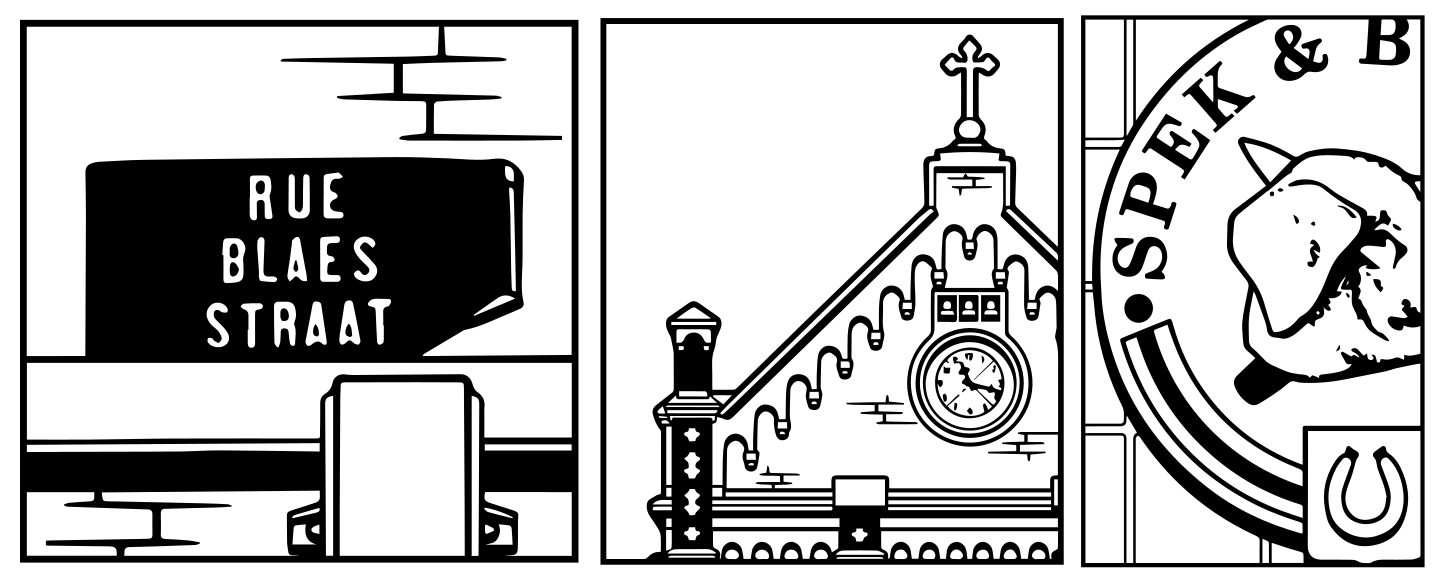
- Because this is Belgium, where the comic strip is a serious art form, and because a butcher's paper spends its life being looked at on kitchen counters. The panels were drawn for us in the clear-line style this country invented. The paper does its job either way; it just refuses to be boring while doing it.
- Where does the name Spek & Boonen come from?
- Boonen is the family name, and spek is bacon. Doing something 'voor spek en bonen' is Dutch for joining in for the fun rather than for the score. A butcher called Boonen gets one chance at that joke, and we took it.
- I'm vegetarian and got dragged here. Now what?
- Stay anyway. There's the Catharinadal cheese, which you won't find in many Brussels shops, and there's a butcher who likes talking about farms even when no meat changes hands. We won't try to convert you.
- Can I get bones for the dog, or for stock?
- Usually, yes: we buy whole animals, so there are bones, and a dog with good taste is welcome to them. Ask what's there that day; it changes with the cutting.
- How long does the meat keep at home?
- Set the fridge to four degrees and keep meat on the coldest shelf, just above the vegetable drawer. Minced meat and américain: one day. Poultry and offal: two days. Whole cuts: two to four days. Those are the FAVV's numbers. We cut fresh, so your clock starts at zero. In summer, bring a cool bag.
- Can I freeze it?
- Yes. At minus eighteen, whole cuts keep six months; minced meat and fatty preparations, three. Thaw in the fridge, never on the counter. And thawed meat doesn't go back in the freezer unless you've cooked it in between.
- I'm pregnant. Can I still eat the américain?
- If you're not immune to toxoplasmosis, the official advice is no raw meat, ours included. Cooked through: no problem. Ask your doctor about the screening. We'll still be here in nine months.
- The beef is darker than in the supermarket. Is that normal?
- That's the point. Supermarket beef is young, wet-packed and bright pink. Ours hangs a month as a whole carcass: moisture leaves, the colour deepens, the flavour concentrates. Dark patches on dry-aged beef are the drying, nothing more. And the fat runs yellow because the animals eat grass. Carotene does that.
- How should I cook this?
- Ask at the counter when you buy; it's half of what you're paying for. The house rules come from Harold McGee, whose book we trust: salt early, dry the surface before it hits the pan, low and slow for the muscles that worked, hot and brief for the ones that didn't, and let it rest before you cut.
- Do you deliver?
- No. Order on the website and pick it up here. If it truly can't wait, send a taxi. We'll hand over the bag.
- How do I order?
- Through the website, for pickup. There's no phone, on purpose: the hands that would answer it are cutting your order.
- Where do I park?
- The Marolles is paid parking Monday to Saturday, free on Sunday, and the flea market takes the Jeu de Balle square every morning. Easiest: Interparking Porte de Hal, seven minutes on foot, five euro flat on weekends. Closest: the ParkBee at the old Chapelle station, five minutes. Honest answer: bus 27 or 48 stops at Jeu de Balle, and that beats circling the block.
- I'm hosting ten people on Saturday. What do I do?
- Order on the website a few days ahead and tell us what you're cooking; we'll size it with you. Count two hundred fifty to three hundred grams per adult, less with a generous table. For a barbecue: one showpiece, plus sausages and skewers. The sausages go first. They always do.
Frequently asked questions
Direct answers to the questions we hear most often at the counter.