
Charcuterie
We are not reinventing charcuterie, just making it without the tricks.
Send us your enquiry→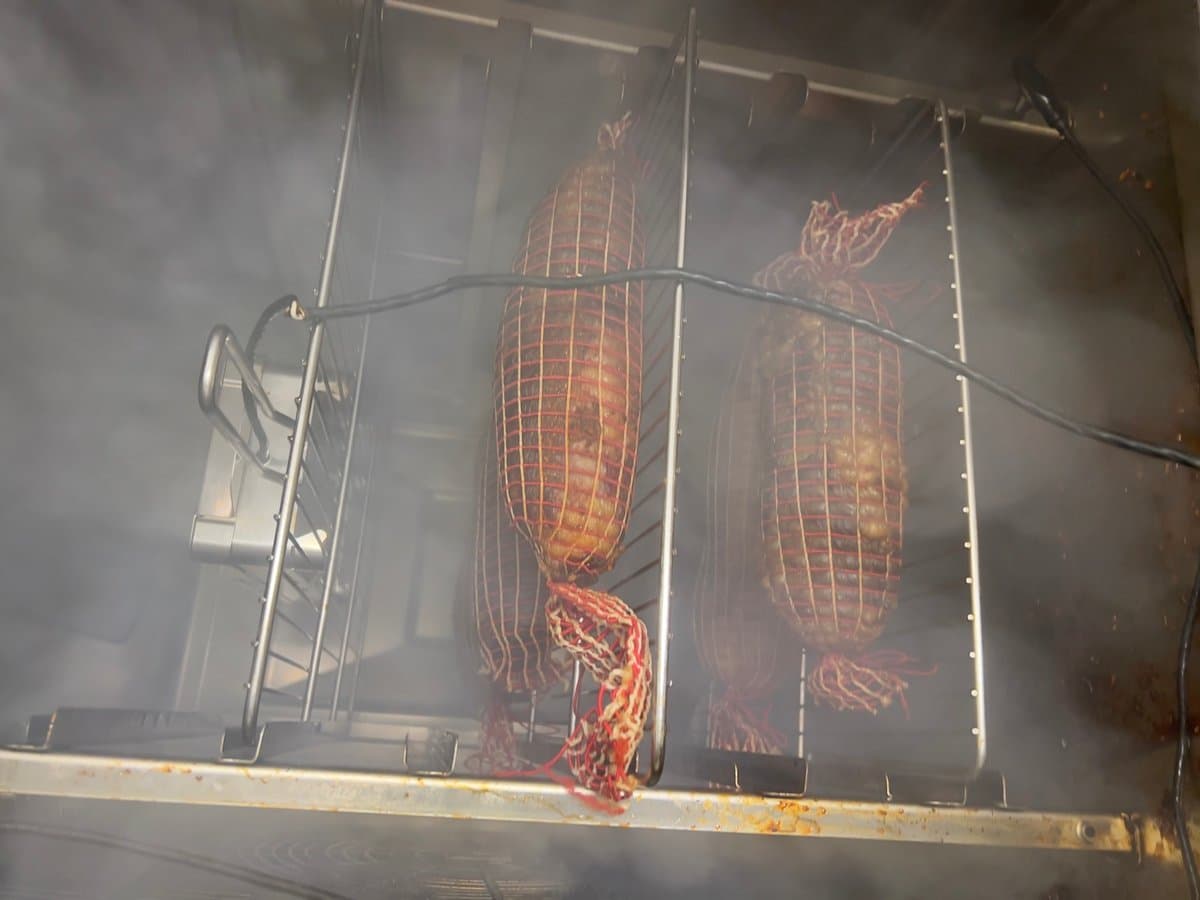
How we make it
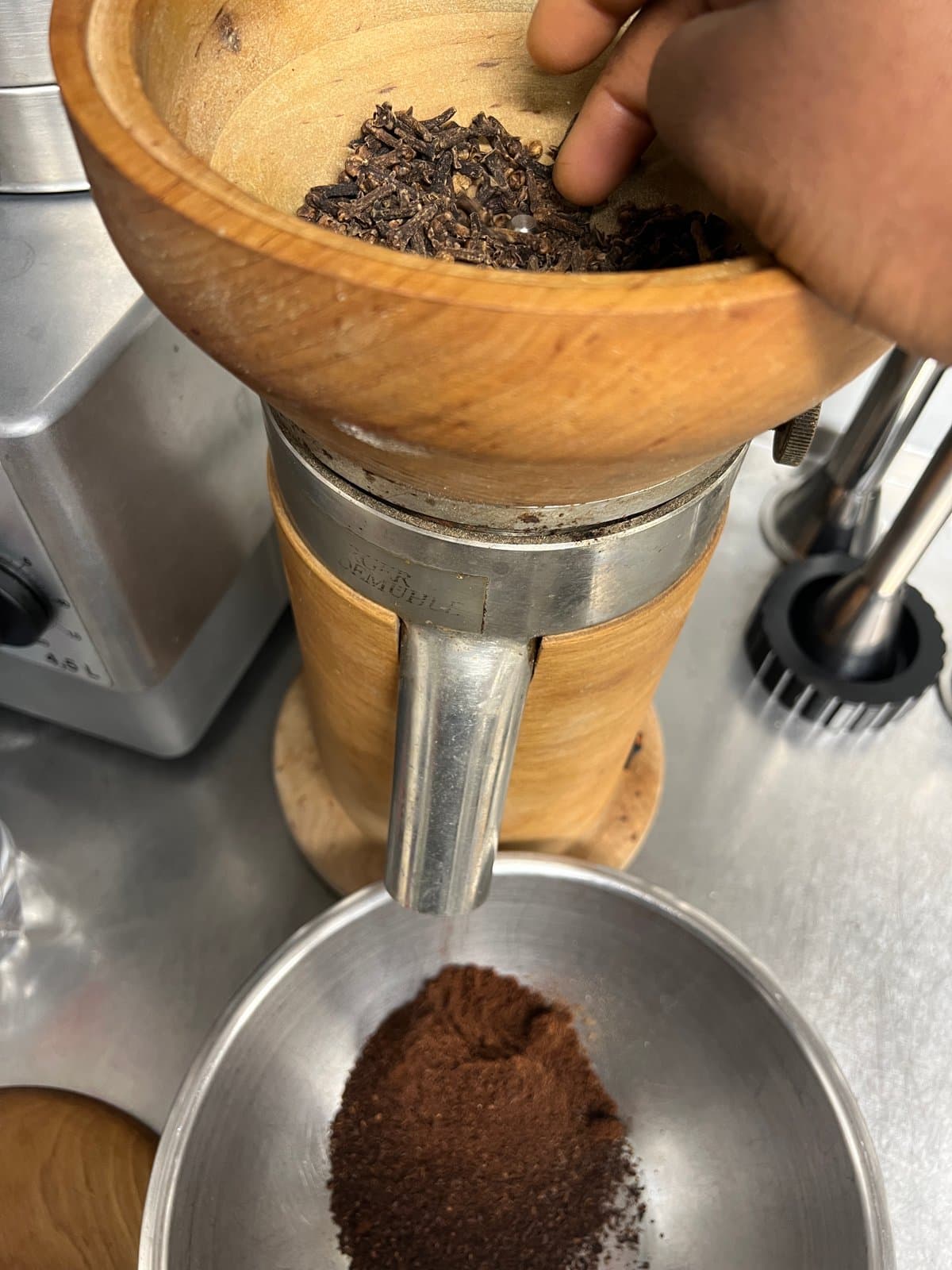
The same free-range pork and beef you buy fresh, cured and cooked here in our own cellar and kitchen. We cure with sea salt and rock salt, and with curing salt where the law requires it, as for dried sausage. We don't buy ready-made spice mixes; we grind our own from whole spices in our stone mill: fennel, cep and rosemary, sage and green peppercorn. We work by the Code des usages de la charcuterie, the French artisan's rulebook: no breadcrumbs, no eggs, no fillers.
The range
Jambon Rue Blaes, our own dried ham. Coppa, filet d'Anvers, cecina. Paté de campagne and a spreadable paté. Terrine of guinea fowl and morel. Fresh sausages: Toulouse, fennel, fresh chorizo, cep and rosemary, sage and green peppercorn, garden herbs and shallot. Cooked ham, pastrami, rosbif, smoked duck breast, confit duck legs, rillons. Kabanosy. Kilishi and biltong, thin dried beef.
Patience as ingredient
Look up: the sausages, the dried hams, the coppa, the filet d'Anvers, the cecina hang from the shop ceiling to dry, over the counter. Three to four weeks for most; the farmer's sausage hangs nine months. The knacks are made every two weeks, in sheep casing. Small batches. When a batch is gone, it's gone until the next.
What makes it special
This is the one thing on the counter with no farm behind it and no producer to drive to. Temmy, Bjorn's wife, runs the charcuterie, made here by hand from the animals we already know. The kilishi is hers: thin, air-dried beef with plenty of spice, the way it's made in Nigeria. In sausage there are two schools, the East European and the South European. We make both: the kabanosy and the knack next to the chorizo and the Toulouse.